Pottery
What Our Hands Learn When We Stay
Reflections on Pottery, Presence, and Caring for One Another
Staying With What Is
I did not come to pottery looking for wisdom. I came because my hands were tired in a way that rest does not fix. Oncology has a particular kind of fatigue: not the exhaustion of long hours alone, but the quiet weight of carrying other people’s fear, hope, and waiting. You leave clinic, but parts of you remain behind—sitting with scans, standing in hallways, lingering in conversations that did not end cleanly.
I wanted something that asked less of my mind and more of my hands. I wanted to touch something real. Clay does not optimize. It does not respond to urgency. It pushes back honestly. It tells you, immediately and without judgment, when you are rushing, when you are distracted, when you are trying to impose shape instead of listening for it.
The first thing the pottery wheel teaches you is restraint. Not gentleness—restraint. Force does not help. Push too hard and the clay collapses. Hesitate too long and it stiffens. The work happens in a narrow space between effort and surrender, and you can feel when you are inside that space and when you have drifted out of it.
This is the same space I recognize in clinic. In oncology, timing is everything. When to escalate treatment. When to pause. When to speak plainly. When to let silence carry the moment. There is no guideline for this. No algorithm teaches it. The knowledge lives in the body, in attention, in presence.
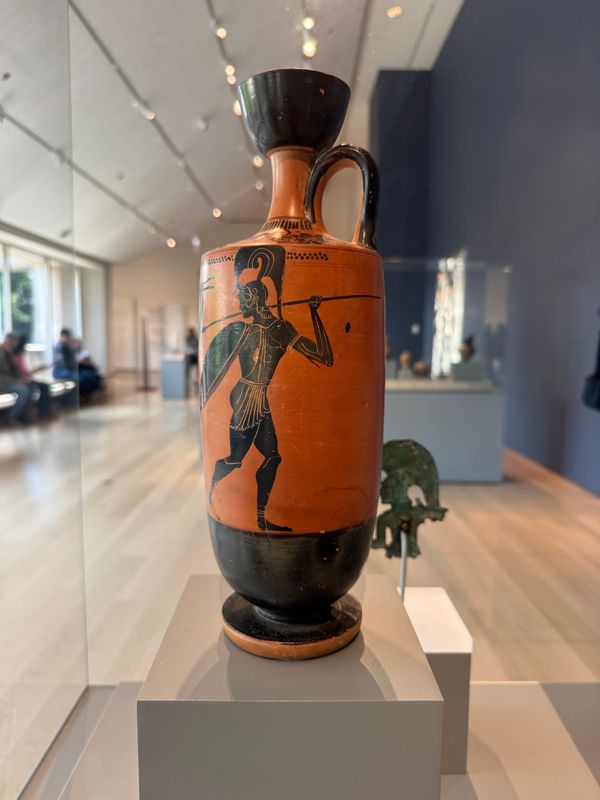
Nearly three thousand years ago, Hesiod understood this. In Works and Days, he wrote about farmers, builders, and craftsmen whose work failed immediately if done at the wrong time. Among them was the potter. The lesson was not about efficiency, but about attunement. He wrote, simply and without flourish,
ἐν παντὶ δὲ ἔργῳ καιρὸς ἄριστος—in every task, the right moment is best.
I think of this often when I feel the urge to rush a conversation toward clarity because uncertainty makes me uncomfortable. I think of it when I hesitate too long, afraid of causing harm, and realize the moment has passed. The wheel does not let you escape this lesson. It insists that you stay with what is happening now, not what you wish were happening.
Learning What It Means to Hold
Pottery also teaches you something else, something quieter but equally important. Every piece must answer a single question: does it hold? It does not matter how symmetrical it is, how smooth the surface looks, how carefully it was shaped. If it cannot hold water, it has failed its most basic purpose.
Plato understood this when he wrote in The Republic about ordinary objects—beds, tools, vessels. He distinguished between the idea of a thing, the crafted object, and the image of the object. There is the vessel that exists in nature, the one made by the craftsman, and the one made by the painter.
τρία γὰρ εἴδη φαμὲν εἶναι τῶν σκευῶν…
The painted vessel may look convincing, but it cannot carry weight. The potter’s vessel can.
Medicine is full of painted vessels. Polished notes. Elegant presentations. Perfect scans. They look complete. But when illness enters a life, what people are asking for is not appearance. They are asking, often without words, can you hold this with me? Can you hold fear without fixing it? Can you hold anger without defending yourself? Can you hold hope without feeding it dishonestly?
Pottery makes this question unavoidable. A vessel either holds or it does not. There is no performance that can disguise that fact. This has changed how I think about competence. Competence is not polish. It is capacity.
Clay also teaches you about fate. While it is wet, it forgives almost everything. You can reshape it, recenter it, begin again. But there comes a moment when it is fired, and what it has become is what it will be. Ancient teachers attributed to Heraclitus the image of the potter shaping clay and finding within it the destinies of human beings—ὁ κεραμεὺς τὸν πηλὸν πλάττει καὶ εὑρίσκει ἐν αὐτῷ τὰς τῶν ἀνθρώπων τύχας. Whether Heraclitus wrote this or later generations placed the image in his mouth matters less than the truth it carries.
In oncology, this is impossible to ignore. Early conversations echo years later. The first way an illness is framed often becomes the lens through which everything else is seen. Mindfulness here is not about calm. It is about responsibility. It is about knowing that this moment will harden into memory.
There is a Greek proverb I return to often, especially on days when I leave clinic wishing I had said something better or clearer:
καὶ ὁ ῥαγὼν κεράμος χρῆσιν ἔχει—even the cracked pot has its use.
Later storytellers turned this into a parable about a cracked vessel that leaks water along the road, watering flowers it never intended to serve. Medicine trains us to fear cracks—gaps in knowledge, emotional leakage, uncertainty spoken aloud. But patients often remember not our precision, but our presence. The pause. The admission that we did not know. The moment we stayed instead of rushing toward resolution. Some of what heals leaks out unintentionally.
Pottery also teaches you that not all environments are safe for delicate things. A Cynic anecdote tells of a potter who fired coarse and delicate clay together, and the coarse shattered the fine. Medical culture is a kiln. Some environments strengthen compassion and attention. Others reward hardness until it becomes brittleness. The ancient Greeks understood that ethics was not only personal. It was communal. Character cures or cracks depending on its heat.
For the Greeks, attention itself was moral. To pay attention was to care. Pottery makes this undeniable. If your mind wanders, the clay responds immediately. Patients do the same. Long before they hear our words, they sense whether we are present.
Ancient Greek life depended on pottery. Without vessels, there was no water, no oil, no wine, no ritual, no hospitality. The highest praise of a vessel was not beauty, but reliability. In oncology, we are asked, again and again, to be reliable in moments that overwhelm.
I am still learning how to do that without hardening.
Shaping Together, Letting Go
I still practice medicine with urgency. Lives depend on it. But I try to practice attention like a potter. To feel timing rather than impose it. To value holding over appearance. To accept cracks as part of usefulness. To choose kilns wisely.
The ancient Greeks did not promise peace. They promised measure, presence, and care. For now, that is enough. Sometimes, it is everything.
And over time, I began to notice that the steps of pottery themselves mirror the way relationships unfold in medicine, especially in oncology—not as a rigid sequence, but as a series of attentions that must be honored if something meaningful is to take shape.
Before anything else, there is the making of clay. Raw earth is gathered, stones removed, water added. It is messy, unglamorous work. In medicine, this feels like the moment before the first visit—the records, the history, the fragments of a life that have not yet become a story. Nothing is elegant here. It is about listening carefully, separating what matters from what distracts, and accepting the material exactly as it arrives.
Then comes wedging. Clay is folded and pressed again and again to remove air, to create consistency, to make it workable. Wedging is repetitive and slow, but without it the piece will fail later in the kiln. This is what early conversations with patients feel like. The same questions asked more than once. The same fears voiced in different forms. It can feel inefficient. But this is where trust forms, where hidden air pockets—unspoken worries, misunderstandings, unacknowledged grief—are gently worked out.
Centering is the most unforgiving step. If the clay is not centered, nothing that follows will succeed. You cannot compensate for it later. In clinic, centering feels like alignment—understanding what matters most to the patient, not what matters most to the disease or the system. If the relationship is not centered on the patient’s values, every plan will wobble.
Only then does throwing begin. This is the visible work. Walls rise. Shape appears. In medicine, this is where decisions are made—treatment plans, shared deliberation, conversations about risks and benefits. From the outside, this is what people think medicine is. But the potter knows that throwing is possible only because of everything that came before.
After the piece firms up, it is trimmed. Excess clay is removed. The foot is refined. Trimming is not about loss, but about balance. In oncology, trimming feels like refinement over time—adjusting plans, stopping treatments that no longer serve, letting go of what once mattered but now weighs the patient down. It requires humility. It requires the courage to remove what you once worked hard to build.
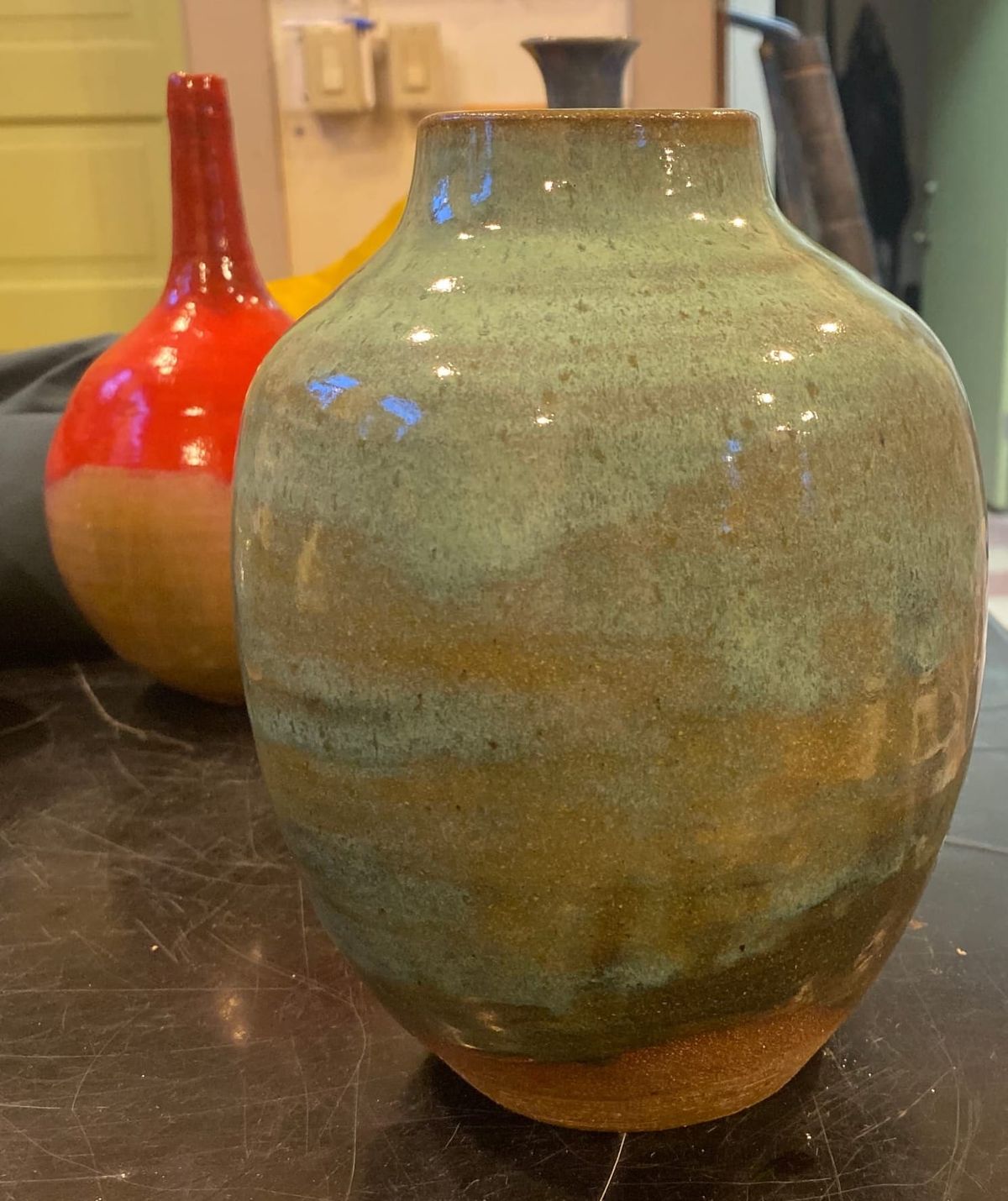
Finally, there is glazing. Glaze does not change the form, but it changes how the piece meets the world. It seals, protects, and sometimes reveals beauty that was already there. Glazing feels like the human layer of medicine—the tone of voice, the gentleness of presence, the kindness that does not alter the disease but profoundly alters the experience of living with it. Glaze is not an afterthought. It is what allows the vessel to function.
And then there is the firing. No potter controls the kiln completely. You prepare as well as you can, and then you let go. Medicine knows this moment well. Outcomes are never fully in our hands. We do the work with care and attention, and then we release the rest.
Thinking this way has softened something in me. It has reminded me that medicine is not only about fixing or curing, but about shaping relationships that can hold whatever comes. The ancient Greeks trusted craft to teach what theory could not.
I am still learning. But when I place my hands on clay, I feel less alone in the work. I feel part of a long lineage of people (Doctors? Potters? Both?) believed that attention, patience, and care—applied step by step—could turn earth into something that holds.
And perhaps, sometimes, that is enough.