Constantine Cavafy: The Poet Who Walks Among Us
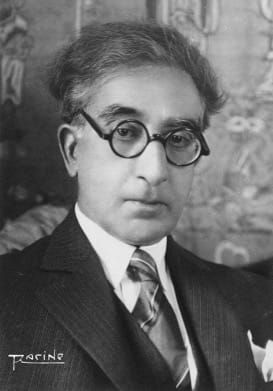
Some writers astonish with brilliance, but a rare few do something gentler and more enduring: they accompany us. Constantine P. Cavafy—quiet, ironic, tender, unafraid of truth—is one of those poets who does not simply speak to us but rather walks with us. His poems meet us at different ages and different phases of life, and somehow they always feel new.
Perhaps this is why Cavafy has become such a cherished presence for me—not as a distant literary figure, but as a subtle compass, a voice that understands hesitation, change, and the quiet courage required for a human life.
Alexandria: The Beginning of a Worldly Poetic Soul
Cavafy was born in 1863 in Alexandria, one of the most cosmopolitan cities of its time. Greek merchants, Egyptian families, British administrators, Jews, Syrians, Italians, and Armenians all wove their lives together in its markets and narrow streets. This mix of languages and histories seeped into Cavafy’s sensibilities.
His family’s fortunes fluctuated, pulling him between Alexandria and Constantinople. He eventually returned to Egypt, living in a modest apartment above a noisy quarter of the city. He worked quietly as a clerk. He wrote slowly, carefully, meticulously. Rather than publishing proper books, he printed individual poems on single sheets and gave them to friends.
There is something tender in that gesture: poetry not as a product, but as a gift.
His Voice: Clear, Honest, Modern Before Modernism
Cavafy’s voice feels modern even now. He wrote in a language pared down to clarity, blending formal Greek with spoken Greek in a way that scandalized traditionalists of his time but makes perfect sense today. His lines are clean, honest, and edged with subtle irony.
He rarely adorned his poems with heavy metaphors or lyrical excess. Instead, he trusted the truth of things: a moment of desire, the weight of political hesitation, the sadness of a leaving city, the dignity of a final farewell.
His sensual poems—often about male desire—are tender without sentimentality. His political poems are sharp without cruelty. And throughout his work runs a deep understanding of what it is to be human: conflicted, hopeful, fearful, brave, and always becoming.
Cavafy as the Thread Through Greek History
One of Cavafy’s most remarkable achievements is the way he connects the entire arc of Greek history—not as separate chapters, but as one long, breathing story.
He moves effortlessly across eras:
from Homer’s seas,
to Hellenistic Alexandria,
to Byzantine corridors,
to the modern Greek diaspora.
Homer and the Beginning of the Journey
Homer gave Greece its archetypal journey—the wanderings of Odysseus. For Homer, Ithaca is the destination. But Cavafy gently shifts the meaning: Ithaca becomes the inner pilgrimage, the growth, the layering of experience. He honors Homer while extending his vision into a modern philosophy of living.
The Hellenistic World — His True Home
While many poets of his era worshipped classical Athens, Cavafy chose the Hellenistic era, when Greek culture radiated outward into Egypt, Syria, and the wider Mediterranean. This was not the Greece of marble perfection; it was the Greece of mixtures, crossings, diasporas.
This world mirrored Cavafy’s own life in Alexandria—multilingual, multicultural, layered. Through forgotten kings, young lovers, diplomats, and ordinary Alexandrians, he brings that era alive again, revealing a Greekness that is expansive, cosmopolitan, and human.
Byzantium — A Quiet Middle Chapter
Cavafy’s years in Constantinople gave him an intimacy with Byzantium. His Byzantines are not grand icons; they are conflicted, ambitious, flawed humans. In doing so, he restores a part of Greek heritage often overshadowed by classical glory and modern nationalism.
The Modern Greek Self — A Continuum, Not a Break
By stitching these eras together, Cavafy shows that Greek identity is not a museum of fragments but a continuous flow: ancient, Hellenistic, Byzantine, modern.
And because he lived outside Greece, he carried the perspective of the diaspora — seeing Greek identity not as rigid or territorial, but as something alive, portable, shaped by memory and movement.
In this way, Cavafy becomes a bridge across 3,000 years, giving Greece—and the world—a unified sense of its past and its humanity.
Courage in Times of Transition
Cavafy often wrote about the delicate moment when one chapter ends and another begins. He does not promise comfort. Instead, he offers dignity and calm strength.
One of his most powerful lines comes from “The God Abandons Antony”, where a man realizes that a beloved phase of his life is ending:
“As one long prepared, and full of courage,
say goodbye to her, the Alexandria that is leaving.”
— C. P. Cavafy, “The God Abandons Antony,” 1911
This is not resignation. It is maturity.
It is the quiet bravery required to meet life as it truly is.
These lines have guided many readers through change, including me. They remind us that endings are not failures — they are thresholds.
My Favorite Poem — A Lifelong Companion
Among all of Cavafy’s poems, “Ithaca” is the one that has traveled with me the most. Each time my life shifts — professionally, personally, emotionally — the poem shifts with me, revealing something new.
It reminds me that arrivals are brief. Journeys are long.
And life, in all its complexity, is meant to be lived fully, with curiosity and courage.
Ithaca is not only my favorite Cavafy poem; it has become a companion.
Below is the poem, offered with the same gratitude and affection with which I carry it.
(Written: 1911, Alexandria, Egypt- Translation: Edmund Keeley & Philip Sherrard)
Ithaca
When you set out on your journey to Ithaca,
pray that the road is long,
full of adventure, full of knowledge.
The Lestrygonians and the Cyclops,
the angry Poseidon — do not fear them:
you will never find such as these on your path
if your thoughts remain lofty, if a fine
emotion touches your spirit and your body.
The Lestrygonians and the Cyclops,
the fierce Poseidon you will never encounter
if you do not carry them within your soul,
if your soul does not set them up before you.
Pray that the road is long.
That the summer mornings are many,
when, with such pleasure, with such joy
you will enter harbors seen for the first time;
stop at Phoenician markets,
and purchase fine merchandise,
mother of pearl and coral, amber and ebony,
and sensual perfumes of all kinds,
as many sensual perfumes as you can;
visit many Egyptian cities,
to learn and learn again from those who know.
Keep Ithaca always in your mind.
To arrive there is your ultimate goal.
But do not hurry the voyage at all.
It is better to let it last for many years;
and to anchor at the island when you are old,
rich with all you have gained on the way,
not expecting that Ithaca will offer you riches.
Ithaca has given you the beautiful voyage.
Without her you would never have set out on the road.
She has nothing more to give you.
And if you find her poor, Ithaca has not deceived you.
Wise as you have become, with so much experience,
you must already have understood what Ithacas mean.
(Written: 1911, Alexandria, Egypt- Translation: Edmund Keeley & Philip Sherrard)
Enjoy your trip to/with Ithaca!